Sustainable Weight Loss: Why Eating Less Is Only Part of the Story
Oct 30, 2026
When we think about weight loss, the first piece of advice is usually “eat less and move more.”
Sounds simple, right?
But if it really were that simple, why do so many people find themselves dieting, training harder and still feeling like they’re getting nowhere?
Creating a calorie deficit is part of weight loss. It’s just not the whole picture.
Why isn’t eating less always the answer?
Weight loss is traditionally explained as calories in versus calories out. If we consume less energy than we use, we lose weight. Fundamentally, that’s correct.
But our bodies aren’t simple machines. Our energy needs and appetite shift with activity levels, medical conditions, hormones, stress, sleep and even how much we’ve been eating recently.
When we significantly cut back, the body adapts to conserve energy. We might move less without realising it, feel more fatigued and see a small drop in metabolic rate. This is called metabolic adaptation. It’s usually modest, but it does mean the deficit you started with can shrink over time.
Our bodies aren’t trends, and nutrition shouldn’t be treated like one either.
What happens when we restrict too much?
When we consistently eat less than our body needs, particularly when we’re physically active, we risk low energy availability. This affects people of all genders.
We need energy for far more than getting through a workout. It supports our bones, hormones, digestion, recovery and brain function. When there isn’t enough to go around, you might notice fatigue, brain fog, mood changes, poor motivation, bloating or constipation. Changes to the menstrual cycle can be an important warning sign, and over time low energy availability can contribute to nutrient deficiencies, reduced bone health and stress fractures.
Then there’s training. Sessions that used to feel manageable become exhausting, strength declines and recovery drags.
Which is a little ironic. We often cut food to improve our health, fitness or body composition, but take it too far and we compromise the very things we’re trying to improve.
The all or nothing dieting cycle
Most of the time, it starts with good intentions. A friend’s diet, something on social media, a new calorie tracking app.
Before long, you’ve built a collection of food rules. Certain foods are off limits, eating out feels stressful and social events need strategic planning.
For a while, you might follow it perfectly. But humans aren’t robots.
Eventually something falls outside the rules. Birthday cake, a takeaway after a long day, or simply being hungrier than expected. Instead of seeing that as a normal part of eating, it feels like failure. That guilt leads to more restriction, overeating or the promise to start again on Monday.
And around we go.
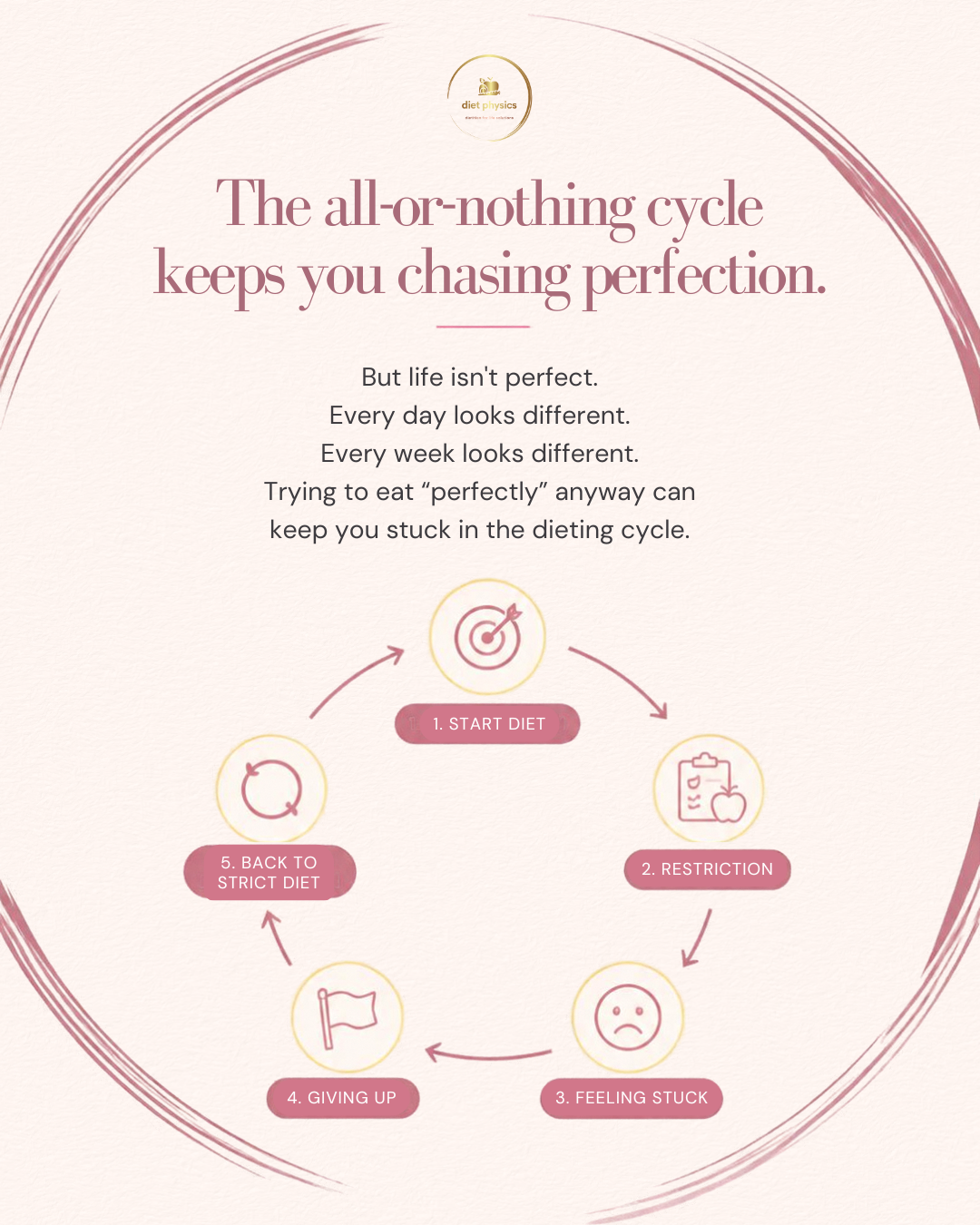
This is why sustainable weight loss needs more than an understanding of calories. We also need to consider behaviour, our relationship with food and how to build in flexibility.
Are you eating enough to support your lifestyle?
Weight loss shouldn’t come at the expense of fuelling your body. You still need enough protein, carbohydrates and fats to support your health, daily life and training, along with enough variety to meet your vitamin and mineral needs.
This matters even more if you’re active. When we lose weight, we don’t only lose body fat. We can lose muscle too. Whether you lift weights, run, do group fitness classes or pole dance, preserving muscle supports your strength, recovery and long-term function.
That’s where adequate protein, resistance training and a modest, appropriately sized deficit come in. The goal isn’t to eat as little as possible. It’s to support fat loss, where appropriate, while protecting your strength, recovery and health.
What does sustainable weight loss actually look like?
This is my favourite part, because we move away from rigid rules and towards what works in real life.
A sustainable approach usually includes:
- A realistic deficit that doesn’t compromise your energy or training
- Regular meals and satisfying snacks to manage hunger
- Your favourite foods, because chocolate, pizza and birthday cake don’t become forbidden
- Progress measured beyond the scales, like strength, energy, fitness and eating behaviours
- Convenience foods that work for you, such as frozen meals and preprepared ingredients
- Habits that hold up on busy weeks, because a plan that only works when life is perfect won’t last
How quickly should you expect results?
Weight loss isn’t linear. Your weight fluctuates with hydration, hormones, digestion and carbohydrate storage, so a higher number on the scales doesn’t automatically mean you’ve gained fat.
A gradual loss of around 0.25 to 0.5 kg per week is often reasonable for active people, though it depends on your health, training load and circumstances. Slower rates tend to make it easier to preserve muscle, energy and recovery. Sustainable change takes time.
When weight loss isn’t the right goal right now
Sometimes the most helpful answer is not to pursue weight loss at all, at least for now.
If thoughts about food or your body are taking up a lot of headspace, if you’re showing signs of low energy availability, or if dieting has started to feel out of control, it’s worth getting support before trying to lose weight. A dietitian can help you work out what’s appropriate for you.
How I approach sustainable weight management
When someone sees me for weight management, I don’t start by handing over a calorie target and telling them to eat less.
I want to understand their lifestyle, training, food preferences, medical history and what they’ve already tried. Sometimes the answer is adjusting portions. Sometimes it’s improving meal structure, increasing protein or actually eating more regularly.
The best nutrition plan isn’t the one that looks perfect on paper. It’s the one that fits your life, supports your health and is realistic enough to maintain.
Ready to find an approach that works for you?
If you’ve been stuck in the cycle of eating less, trying harder and feeling like nothing is working, personalised dietetic support can help.
At Diet Physics, we build nutrition around your lifestyle, preferences and goals, rather than forcing your life around another diet.
Stay connected with news and updates!
Get expert tips, practical resources, and supportive advice for everything from fussy eating and ARFID to building a healthy relationship with food, managing weight, and fuelling your body with confidence. Subscribe now to get exclusive content delivered straight to your inbox.
We hate SPAM. We will never sell your information, for any reason.